Showing posts with label book. Show all posts

Monday, February 5, 2018

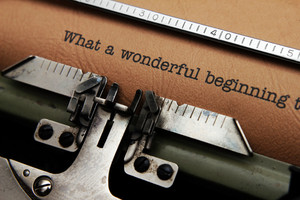
Writing the Opening of Your Story - the TaDa Moment!

Your story starts with the first chapter.

I take that back. Your story starts with the first page.

Oh wait, I mean, your story starts with the first paragraph.

No, sorry, my mistake. Your story starts with the first sentence.

The first SENTENCE. Okay, that makes more sense.

Your first sentence is your "hook" to luring the reader to pause all that they are doing and read your book.

Your hook from the first sentence widens into the first line, the first paragraph, the first page, and the first chapter. All very important in gaining confidence in your writing and success in ensuring your reader.

According to Noah Lukeman, in The First Five Pages, "... the job of the hook is to set the tone for the book..."

Lukeman cautions that the "Hook" is more than a marketing tool. "It can establish a character, narrator or setting, convey a shocking piece of information."

Priscilla Long writes in The Writer's Portable Mentor, "Often a good opening consists of a small sentence that concentrates into its short little self the essence (sometimes the central dramatic conflict) of what follows.

Long lists various ways to use the first sentence:

  • Begin with an aphorism.
  • Ask the central question of the piece.
  • State directly what the piece is about.
  • Establish your protagonist's connection to the subject matter at hand.
  • Begin with a telling anecdote or quote.
  • Rely on the reliable What? When? Where? Why? Who?
  • Begin with a good title.


Long suggests that writers collect openings written by others. Keep a sentence book and collect these passages and study from them, learning from them.

K. M. Weiland writes in Structuring Your Novel: Essential Keys for Writing an Outstanding
Story, "The hook comes in many forms, but stripped down to its lowest common denominator, it's nothing more or less than a question. If we can pique our readers' curiosity, we've got 'em. Simple as that."

Writers want readers to ask, "What's going to happen?" Or, as K.M. Weiland writes, "Readers have to understand enough about the situation to mentally form a specific question. What the heck is going on here? does not qualify as a good opening question."

Your opening to your story must sell the story. You can have the best darn ending ever written but no one will ever read it if they're not hooked in your opening.

K.M. Weiland outlines the traits and parts of a good opening:

  • Don't open before the beginning of the story. Don't dump your backstory in your opening.
  • Open with characters; preferably the protagonist to connect your character with your reader.
  • Open with conflict. Without conflict, you have no story.
  • Open with movement. Keep your characters moving.
  • Establish the setting to ground your reader in the physicality of the story.
  • Orient readers with an establishing shot by presenting the setting and characters' positions within it in a sentence or two.
  • Set the tone the reader to understand what type of story they are reading.

Openings give you the best and first opportunity to make a profound statement about your story. It should include as many of the following five parts as you can:

  • Inherent Question
  • Character
  • Setting
  • Sweeping Declaration
  • Tone


Work on your opening lines. They should introduce your story’s character, plot, setting, theme and voice and send the reader on an unforgettable adventure.

James V. Smith, JR., outlines what a great opener might contain, in The Writer’s Little Helper:

  •      A great first line
  •       Excitement: high action, high drama, high anxiety
  •       An intro to the heroic character
  •       An intro to the worthy adversary
  •       Problems that stand in the way of the heroic character achieving a worthy goal
  •       Your best writing style, to set the tone and to show you can write: action, conflict, imagery, dialogue, irony
  •       A feel for the story’s setting and atmosphere
  •       Foreshadowing of things to come
  •       Above all, a single overwhelming central problem that will only get worse until it appears incapable of being solved, a problem that will defeat the heroic character unless she defeats it in the Closer


A final word of caution from Smith, “Don’t press too hard with these opening words. Just as in trying to meet someone you admire, it’s possible to go breathless and appear needy if you try too hard. You’ll be tempted to overwrite an overwrought opener if you’re not careful. Be cool. Be natural. No matter how hard you have to work at it, make it look easy.”


REFERENCES:
The Writer's Portable Mentor by Priscilla Long
The First Five Pages by Noah Lukeman
Structuring Your Novel: Essential Keys for Writing an Outstanding Story by K. M. Weiland
The Writer’s Little Helper by James V. Smith, JR.


Wednesday, September 28, 2016

First Drafts - You Have to Start Somewhere

 We all want to write a book, that's why we feed the passion inside of us. But, how many of you have started writing a book, then put it away and started another and then another? Many writers have a "stop, start, stop, start" mentality about their writing. Every time an idea about another book comes into their head, they stop the book they are currently writing and start on the new idea. Then, another idea sweeps into their mind, so they stop their current book again, and start on another new book, again.

That type of writing can be exhausting and infuriating. I can tell you how I handle the numerous ideas that flit in and out of my head every day. Whether they be dreams, articles, words, newspaper articles, overhead conversations (yes, we all do it) or that "must write" book of your passion.

I keep binders with plastic inserts so I can put the things that inspire me about a topic or idea. I write a few words or a sentence or two to help me remember why I was so inspired and put that in with the other items. Then, I close the binder and go back to the current book I'm writing. 

How many binders do I currently have on my shelf? Four 4-inch binders. Packed so full, they are overflowing. 

I know. 

I get a lot of ideas. 

So, now that I went off on that little tangent, let's get back to first drafts. Be truthful, how many first drafts of articles, blog posts, or books do you have cluttering up your desk, computer, head?


Bernard Malamud gives us a great quote about the purpose of first drafts. 

Do you consider this true about your first drafts?

Do you treat your first draft as something that must be written and finished, editing comes later?

Why or why not?

If you edit as you write, will you ever truly finish your book?


For some writers, editing can take a lot of time. Why? For a variety of reasons:

  1. They expect their editing to make their writing perfect.
  2. They think they are the only writers who can truly appreciate their words and the only ones who can edit appropriately.
  3. Editing is "rewriting" and for some writers that could mean a whole "new" book!

BuzzFeed posted a great article of 27 famous writers giving writing/editing advice.

27 Pieces Of Advice For Writers From Famous Authors

Celebrated authors, editors and illustrators write advice to young writers on their hands for “Shared Worlds,” a two-week creative writing summer camp at Wofford College. 

The article is unusual because each author wrote their advice on their hand. 

Another blog post I found extremely helpful comes from YA Science Fiction author, Beth Revis.


I like her website and blog so much, I'm adding it to my Recommended Links.


This button image gives you the greatest advice about First Drafts.

Don't you think? 

Important tip to know: A book cannot be properly edited until the first draft is written. I know that there are a lot of authors/writers out there who will disagree with me, as they write and edit as they go. But, honestly, can you really focus on the story you are writing and making sure there is consistent continuity if you are always changing something?


Don't let this happen to you.

Writing and editing is a slippery slope. Your characters are already trying to write the story the way they think it should be written. If you aren't paying attention, they will run off and either change the outline of the book, or disappear all together. They may even band together and attempt to fight you.


Yes, I do believe my characters have life. My characters talk to me all the time. While I'm writing, after I've written, and before I've started the next book. Get to know your characters. Inside and out. Once you know them intimately, you'll be able to write their story.


Once you've discovered all of your characters' stories, only then than you let go of the control you hold over them and they will be able to tell their own story.


In conclusion, I'll let Nora Roberts have the last word.

Happy Writing,


Monday, June 16, 2014

The Least You Should Know - Quotation Marks

Quotation Marks are a fickle creature when it comes to punctuation. Where do you put them, when do you put them, how do you put them?

All great questions. Usually quotation marks go around speech. Dialogue. Talking.  Like this little guy here to the left. He's speaking but we don't know what he's saying so we need to give him quotation marks to indicate what is speech.

Got it?

But, did know that you put quotation marks around other things you write besides dialogue? 

Yep, and we're going to learn how to use quotation marks properly in this post.

So, let's begin.


1. Put Quotation Marks around the exact words of a speaker (but not around an indirect quotation)

She said, "I will not go." (Her exact words.)

She said that she would not go. (Not her exact words.)

Whenever that precedes the words of a speaker (as in the last example), it indicates that the words are not a direct quotation and should not have quotation marks around them.

She said, "I will not go. I have other plans. Don't bother picking me up."

The words telling who is speaking are set off with a comma, unless of course, a question mark or exclamation mark is needed.

"I will not go," she said.

He said, "You will go."

"Don't you understand me?" she asked.

"Come here!" he shouted.

Every quotation begins with a capital letter. But when a quotation is broken, the second part doesn't begin with a capital letter unless it's a new sentence.

"Genius," said Anthony, "is the art of taking infinite pains."

"Don't be afraid to take a big step if one is indicated," said David Lloyd George. "You can't cross a chasm in tow small jumps."

Always begin a new paragraph with each change of speaker.

"May I have that brush?" I asked.
"What for?" Nancy said.
"To brush my dog's hair," I replied.


2. Put Quotation Marks around the name of a story, poem, essay, or other short work. For longer words such as books, newspapers, plays, or movies, use underlining (which means italics in print) or use italics.

I like Robert Frost's short poem "Fire and Ice."

Have you seen the movie Star Wars?

Rachel Carson's essay "And No Birds Sing" is found in her book Silent Spring.

We went to see the play The Lion King.


There you have it. Quotation Marks aren't as difficult as we once thought, once we know the rules, right?

Did you get all your questions answered? Do you have more questions about Quotation Marks? Ask in the comments below.


Monday, February 24, 2014

There is no Age Limit for Pursuing Your Dreams

I'm turning over my blog to a guest blogger who has caught my eye. She has a unique style that captures the reader with a friendly "hello" and "let's sit and chat" manner. I hope you enjoy this post as much as I did.


Writing is an incredibly unique profession, it is perhaps one of the few careers that really does get better with age.  In today’s extreme youth oriented society, it is shocking to suggest that there is some benefit to getting older, but in terms of being a writer, age has a great many advantages.  After years working in healthcare and education, I decided it was time to do what I had always dreamed of and become a full time writer.  This has not been without some struggles, but I believe that right now is the best time for me to jump into writing with both feet.

Best-selling writer Elizabeth Gilbert is quoted saying “Writing is not like dancing or modelling; it’s not something where if you missed it by age 19 you’re finished.  It’s never too late.  Your writing will only get better as you get older and wiser.”  Using all of your life experience in your writing gives your work a richness and depth that is earned through all of the things you have learned along the way.   I am not suggesting that there are no good young writers, but there are a great many mature writers who had added so much to the literary world. 

The average age for a first published book in this country is 42.  My first book was published when I was 38 years old, so I beat the average just slightly.  After taking a few years off I am ready to jump back into the writing world and at almost 50 years old, I am in good company.  There are quite a few literary late bloomers like me.  One of my favorite authors, Claire Cook, likes to boast that she was writing her first novel at 45 and at 50 she was walking the red carpet as her book was turned in to a highly successful Hollywood movie.  She is living the writing fairy tale that many writers aspire to.  The unifying theme of all of her books is reinvention, an idea that seems to resonate with so many of us as we get older.  At 45 Cook is in good company.  Wildly popular author Janet Evanovich did not publish her first book until age 44.  Helen Dewitt also published the highly successful The Last Samurai at age 44.  These are not even some of the older authors that I discovered.  As a child I loved reading the Little House on the Prairie books.  I would read and share these books with my friends.  I was astonished to learn that Laura Ingalls Wilder did not even begin writing her stories until the age of 44 and she was first published at the age of 64.  My childhood would not have been the same if Ms. Inglls Wilder thought she was too old to try something new.  After leaving the teaching profession, Frank McCourt first published a book in his mid-sixties 


There has never been a better time to write and publish a book.  As the popularity of ebooks continues to grow exponentially, authors have so many choices for publication.  There are unending technology tools and resources available for writers.  No longer do authors have to spend days at the local library, trying to read old microfiche films, now just a few clicks on your lap top can yield the research needed for your latest book setting.  If you don’t want to go the traditional route of an agent and a publishing house, Indie publishing firms abound.  Once a book is written, authors have a plethora of marketing tools at their disposal through a whole host of social media platforms.  The tools for writing have improved so much, anyone with a computer and enough motivation can become a writer – at any age.


BIO:
Laurie Jake is a self-described writer, dreamer and child at heart.  Her unique insights on emotions and behavior come from her many roles as a wife, mother, sister and former middle school teacher.  Laurie wrote her first book in 2001.  Laurie lives in Arizona with her incomparable fiancé and three unruly dogs. http://lookingonthesunnyside.blogspot.com/


Monday, December 23, 2013

Do You Think You're the Only Scared Writer Out There?

Twenty-Five Years Ago:

I was the scared writer who didn't know if I had enough talent in my little finger to try and write a book.

  • I have been there with a book, not knowing if it's good enough to catch a publisher's eye.
  • I've been there with a publishing contract in my hand not knowing if I should sign or what?
  • I've been there when that first book was printed and I held it in my hands for the first time. Like holding your baby for the first time.
  • I've been there in critique classes when another writer would tell me I "wrote it wrong" or "used wrong tense" or something else equally as humiliating. How could I be writing it wrong? Then the flood of "am I not good enough" comes again.
  • I've been there during book signings when no one shows up. Once again, it hits, "Am I not good enough?"
  • The marketing is scary. It means I have to talk about myself in a positive way.
  • The selling is hard. How do I tell people about my book and hope they'll buy it? I'm not a salesperson.
  • I've been the writer who sits in a room of other writers thinking I'm the only one who is scared.


Does this sound like you?

Raise your hands. Too scared to raise your hand? I totally understand. I've been there.

I have BEEN there.

Not anymore.

That was twenty-five years ago. I am no longer that scared little writer thinking I'm the only one in the world who feels like that.

I've written books. I've had books published. Yes, with real publishers!! Publishers who I had to submit to and wait anxiously for acceptance or rejection.

I've got a rejection pile so large you can sit on it.

Yes, I've kept every single rejection letter. 

Why? Because it means I'm working my butt off trying to get my work published. It means I'm working.

I got past the "what if I'm not good enough" and I'm writing, but I think my dialogue is flat or I can't tell which Point of View I'm in. I did research. I learned. I asked other writers. 

I wanted to join a writers' group. There wasn't a writers' association  in Florida. So, what did I do? I co-founded the Florida Writers Association. I worked hard with other people to make it the best organization in Florida. It is, too. Just ask anyone.

I created writers' groups. I created critique groups. I helped other writers. The FWA motto is "Writers Helping Writers". 

Like it?

It's my mission to help other writers. I want to provide aspiring fiction writers with the tools they can use to be the best writers than they can. I know I can do it. 

Why?

Because I've been there.

And, I did it all the while fighting a debilitating disease. Bipolar Disorder. I fought against 
  • social anxiety disorder, 
  • generalized anxiety disorder, 
  • panic attacks, 
  • PTSD, 
  • and OCD. 


It never stopped me from writing. It never stopped me from succeeding. 

I did it. 

You can too.

I know, deep down in my heart, you have what it takes to be a great writer. If I can do it, anyone can. 

I wrote through hospitalizations. 

I wrote through suicide attempts. 

I wrote through depression. 

I had great writing moments during manic episodes.

I learned ways to manage the Bipolar Disorder so that I could be the best writer I knew I could. I knew it was inside. I knew I had to be the one to break out of my barriers and fight the obstacles. 

I did.

If you are a true writer, you won't let any obstacle, big or small, get in the way of writing.

I didn't. 

I can help provide you with the tools you need to be the best writer you can. 

Just write to coach@vickimtaylor.com and tell me you're ready to be the best writer you can be. We'll take it from there.


Image credit: poulcarlsen / 123RF Stock Photo

Monday, September 9, 2013

Writing Tips - Advice from Robert Newton Peck

According to Robert Newton Peck, the author of many fiction and non-fiction books, "Writing is not an art. It is a craft. And the more you work at it, the better you become." I met Mr. Peck on several occasions and his directness and sharp insight made his message all that more poignant. Of all the books, Mr. Peck as written, I'll always treasure the one he signed for me, Secrets of Successful Fiction.

This book is meant to be a toolkit for writers. I've read it. And, I'd like to share some of Mr. Peck's more important messages with you. Even though it was written in 1980, the information shared is well worth the read.

Humor is a big part of Robert Newton Peck's life and work. If you ever get a chance to read this or any other book he's written, you'll be amazed at how he can infuse humor in nearly every situation.

1. An amateur writer tells a story. A pro shows the story, creates a picture to look at instead of just words to read. A good author writes with a camera, not with a pen.

2. Flowers belong in gardens, not in books. As a reader, I can't stand flowery writing. Writing is not description. It is action. Writing is not a butterfly collection of adverbs and adjectives. Good fiction is a head-on crash of noun and verb.

3. Resist beginning your story with a description of the setting. This is the trademark of the amateur. Instead, start your book with a combination of talk and action. Nouns and verbs.

4. Writing is not a shotgun. It's a rifle. Zero in. Get dirty. Do your research. Focus on the story.

5. A plot is two dogs and one bone. A plot is merely a dramatic situation where a character 1. wants something, 2. tries to get it, 3. And is opposed. It boils down to want. Mother Nature, in her wisdom, created all living things to want something. The want-syndrome is observed, understood, and practiced by every savvy writer.

6. Where's the camera? Point of view is knowing where the camera is that records the action, dialogue, and thoughts. Point of view is determined when the author decides which character is going to tell the story. Does the camera always, in every book, have to be in just one person's head? No. To write a book in which your characters think secret thoughts about each other, you must use multiple viewpoints, with the camera inside the heads of many. But remember this: there is only ONE camera.

7. A writer must learn to stick to the here-now of an established situation, and not go gallivanting off to Topeka, Valdosta, or Flashback, Wyoming. Don't wander. Stick with the action that you have taken the time and trouble to establish.

8. Humor is necessary to any good book. To lighten the lyric. For pace. Humor is a bridge, a connection, a sudden span that unites two previously disassociated entities. It is that surprising arc-jump of light that flashes between anode and cathode. Comedy is a marriage of two things, two ideas, two beings that were never before connected.

9. Before you begin Chapter 1, be sure to outline all your characters so that you know them inside and out. If you get to know your characters, they will help you write your book. Get to know them so well that they begin to talk to you. To say things. Do things. Want things.

10. If you have a hero in your book, pour two ingredients into your mixing bowl: good and bad. Make him real. Rub some mud on the guy. Get him dirty. No one is nice all the time.

11. Read  a lot of stuff. Browse in bookstores. See what's being done, sold, and then go do it yourself. Borrow.

12. Amateurs worry about overusing the word "said" when two characters converse, so much so that they herd in every substitute for "said" they can muster. Worse than that (if anything could be) the amateur seems compelled to describe "how the obvious was stated ... by adding useless ly adverbs following each "said". Don't be afraid that you've said "said" too often. Nobody reads it.

13. Avoid exclamation marks !!!

14. Quit underlining every other word because you think it's important.

15. Avoid cliches.

16. Make your character care. As soon as you make your character care for someone, or something, the reader begins to care about what happens to the character. But the care must be for something or someone other than himself.

17. Sound is one of the spices of fiction, to perk a reader's ear (and eye) and make him fell he's really there. Use sound effects.

18. Hook the reader with the opening of a chapter. A page in a novel is not a block of text. Readers hate this, and have since childhood, because it reminds them of textbooks. Learn to open up your pages to welcome the reader's eye. A book page must not only read well, it must also look inviting. Open, like a panoramic painting. Be generous with your white space.

19. Titles are darn important. Here's why: For every one person that reads your current novel, there will be a thousand who will just read your title. And (you hope) remember it. And maybe even say, "Yes, I've heard of that book." Titles, like you and me, are born.

20. Remember that committees of people don't (or shouldn't) write books. One person does. That's you. Editors suggest changes. Then, it is up to you as an author to measure the worth of those suggestions and act upon them. Very few authors can edit their own stuff. A good editor tightens as book. He gives a manuscript polish. Be easy to work with. Be flexible.

 A lot of great advice, eh? If you get the opportunity, read the book.


Tuesday, June 18, 2013

Happy SITS Day to Your Writing Coach

Good morning and Happy Tuesday! The day has finally come…it’s my SITS Day! For those of you who aren’t familiar with SITS, SITS (Secret is the Sauce) is a networking website for women bloggers.it is a community of 40,000 women bloggers who provide support, share tips, and encourage one another through the journey of blogging. It’s a great way to meet new bloggers and get fantastic blogging tips and information. Interested in checking it out? Head on over to SITS here! 


Let me tell you about Your Writing Coach. It grew out of a love I have for helping fellow writers. I am an award winning author and was always being asked about how I did this or that, or if I would proofread something. I ran an editing group for a while, but It wasn't "global" enough. Our critique group was only successful if we kept it small. So, I decided to take my help and opinions and research to the Internet. Thus, Your Writing Coach was born.


I give writing tips, writing exercises, and do the research for you when it comes to how to use possessives or capitalization. I did a whole series on "The Least You Should Know about English" and it was a great hit.

I also share my posts with the Indie Writers Network as I'm a group moderator over there. One of the things I like to share over there are quotes from authors and good writing books. Check them out if you get the chance.

On the left side of my blog is a list of links to other blogs and Internet pages I think you'll like. If you have something for me to add, please let me know.

Some personal information about me. I'm married to a wonderful man, we have an American Eskimo dog and Sun Conure parrot at home along with a 400 gallon saltwater aquarium. My three children are grown and on their own and they've given me three wonderful grandchildren with a new one on the way due in November. I'm so excited!

I live in vacationland Florida and we enjoy the water as much as we can. My husband is an avid diver and underwater photographer. I paddle around on top as a snorkeler. 

I have this blog and another more personal blog called Vicki's Blog.

I am owner of several websites such as Vicki M. Taylor, author and My Balanced Life.

I also write articles for the International Bipolar Foundation. This article was written for May Mental Health Month, called What Mental Health Means to Me.

Thank you for visiting and I hope you stick around and check out my site and the four years of blogs I've written. Hopefully, you'll find something useful.

Have a blessed day!