Showing posts with label setting. Show all posts

Monday, February 5, 2018

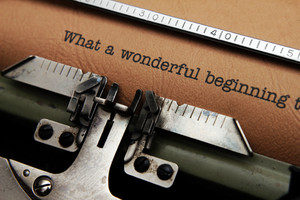
Writing the Opening of Your Story - the TaDa Moment!

Your story starts with the first chapter.

I take that back. Your story starts with the first page.

Oh wait, I mean, your story starts with the first paragraph.

No, sorry, my mistake. Your story starts with the first sentence.

The first SENTENCE. Okay, that makes more sense.

Your first sentence is your "hook" to luring the reader to pause all that they are doing and read your book.

Your hook from the first sentence widens into the first line, the first paragraph, the first page, and the first chapter. All very important in gaining confidence in your writing and success in ensuring your reader.

According to Noah Lukeman, in The First Five Pages, "... the job of the hook is to set the tone for the book..."

Lukeman cautions that the "Hook" is more than a marketing tool. "It can establish a character, narrator or setting, convey a shocking piece of information."

Priscilla Long writes in The Writer's Portable Mentor, "Often a good opening consists of a small sentence that concentrates into its short little self the essence (sometimes the central dramatic conflict) of what follows.

Long lists various ways to use the first sentence:

  • Begin with an aphorism.
  • Ask the central question of the piece.
  • State directly what the piece is about.
  • Establish your protagonist's connection to the subject matter at hand.
  • Begin with a telling anecdote or quote.
  • Rely on the reliable What? When? Where? Why? Who?
  • Begin with a good title.


Long suggests that writers collect openings written by others. Keep a sentence book and collect these passages and study from them, learning from them.

K. M. Weiland writes in Structuring Your Novel: Essential Keys for Writing an Outstanding
Story, "The hook comes in many forms, but stripped down to its lowest common denominator, it's nothing more or less than a question. If we can pique our readers' curiosity, we've got 'em. Simple as that."

Writers want readers to ask, "What's going to happen?" Or, as K.M. Weiland writes, "Readers have to understand enough about the situation to mentally form a specific question. What the heck is going on here? does not qualify as a good opening question."

Your opening to your story must sell the story. You can have the best darn ending ever written but no one will ever read it if they're not hooked in your opening.

K.M. Weiland outlines the traits and parts of a good opening:

  • Don't open before the beginning of the story. Don't dump your backstory in your opening.
  • Open with characters; preferably the protagonist to connect your character with your reader.
  • Open with conflict. Without conflict, you have no story.
  • Open with movement. Keep your characters moving.
  • Establish the setting to ground your reader in the physicality of the story.
  • Orient readers with an establishing shot by presenting the setting and characters' positions within it in a sentence or two.
  • Set the tone the reader to understand what type of story they are reading.

Openings give you the best and first opportunity to make a profound statement about your story. It should include as many of the following five parts as you can:

  • Inherent Question
  • Character
  • Setting
  • Sweeping Declaration
  • Tone


Work on your opening lines. They should introduce your story’s character, plot, setting, theme and voice and send the reader on an unforgettable adventure.

James V. Smith, JR., outlines what a great opener might contain, in The Writer’s Little Helper:

  •      A great first line
  •       Excitement: high action, high drama, high anxiety
  •       An intro to the heroic character
  •       An intro to the worthy adversary
  •       Problems that stand in the way of the heroic character achieving a worthy goal
  •       Your best writing style, to set the tone and to show you can write: action, conflict, imagery, dialogue, irony
  •       A feel for the story’s setting and atmosphere
  •       Foreshadowing of things to come
  •       Above all, a single overwhelming central problem that will only get worse until it appears incapable of being solved, a problem that will defeat the heroic character unless she defeats it in the Closer


A final word of caution from Smith, “Don’t press too hard with these opening words. Just as in trying to meet someone you admire, it’s possible to go breathless and appear needy if you try too hard. You’ll be tempted to overwrite an overwrought opener if you’re not careful. Be cool. Be natural. No matter how hard you have to work at it, make it look easy.”


REFERENCES:
The Writer's Portable Mentor by Priscilla Long
The First Five Pages by Noah Lukeman
Structuring Your Novel: Essential Keys for Writing an Outstanding Story by K. M. Weiland
The Writer’s Little Helper by James V. Smith, JR.


Monday, August 15, 2016

August Writing Challenges: Day 15 - Dialogue Without Words

August. The summer is nearly over. Kids are going back to school. You now have some time on your hands.  Okay, you still have a list of chores a mile long, but let's put writing at the top of the priority list, okay?

I am going to challenge you with a writing prompt every day this month. Are you up for it? I hope so.

The writing challenges will be about a variety of topics and hopefully cause you to dig into your writing toolbox to complete with emotional skill.

Watch out, I just might throw in a fun one, well, just for fun!

For the fifteenth challenge we're going to attempt to write a scene using no words to convey dialogue:

Here is your challenge:

First, write a sentence or two describing the tension you intend to explore between your characters: What does each one want?

Using NO dialogue, in less than three hundred words, let the reader discover something about the relationship between two characters by where we find them, what they are doing, and how they interact with each other.

Use this basic formula:
Reveal character A in a place (setting) doing something (activity). Character B might already be in the scene, or B might enter. Either way, B has a strong need or want - an ISSUE he/she wants to address. B interrupts or engages A, who also has an objective - something he/she is trying to get done, and / or something he/she does or does not want to talk about. This clash of objectives is an important element in the scene.

TIPS:
Focus on selecting and utilizing setting and activity so that your readers discover - because you show them, rather than tell them - something essential about at least one, if not both, of your characters.

DO NOT USE DIALOGUE.

This challenge requires you to have setting and action, not something your characters say, communicate to the reader.

This might be frustrating, and give you all kinds of ideas about what you WILL have them say to each other when you have a chance.

IMPORTANT: 
Do not tell us what they would be saying. Part of the challenge is to explore how we communicate without words.

I hope you find this challenge enjoyable.


Tuesday, August 2, 2016

August Writing Challenges: Day 2 - Character Description

August. The summer is nearly over. Kids are going back to school. You now have some time on your hands.  Okay, you still have a list of chores a mile long, but let's put writing at the top of the priority list, okay?

I am going to challenge you with a writing prompt every day this month. Are you up for it? I hope so.

The writing challenges will be about a variety of topics and hopefully cause you to dig into your writing toolbox to complete with emotional skill.

Watch out, I just might throw in a fun one, well, just for fun!

For the second challenge we're really going to discover how descriptive you can be with characters:

Here is your challenge:

You swore you would not go to Thanksgiving dinner at your cousin's house ever again if she invited her ex-boyfriend. You go. He's there. Describe the dinner.

Tip: How do you reveal character through description?

The most obvious way to reveal characters is by describing what they look like: handsome or plain, wrinkled or smith face, color of hair, height, slim or average or fat, what kind of clothing they wear  and so forth.

Beginning writers overuse this techniques and often blurt everything out of the first time we meet the character.

People writing in the first person have an even harder time. Typically they end up having their character look in a mirror. It's an overused solution and it's clumsy.

When using description, pick out specific, interesting details. Try to stay away from generic descriptions like "handsome" or "attractive" or "motherly" unless you're just giving a quick indication of a minor character. For your major characters, provide specifics. For inspiration, consider the people you know.  When you base your descriptions on reality, you are less likely to fall back on cliches.

You can reveal character through:

  • Setting
  • Action
  • Other People's Eyes

Have fun with this challenge!


Monday, October 20, 2014

How to Write a Short Story

What is a Short Story?
A short story is a work of fiction or imagination that is usually written in easily understandable grammatical structure with a natural flow of speech. Short story is meant to be read at single sitting and therefore should be brief and as direct as possible. A typical short story has very little action and hardly any character development.
Basic Elements of a Short Story
Short stories have six basic elements that they share with longer works of fiction. The basic elements are: setting, conflict, plot, characters and character development, theme, and point of view. All stories have some version of all of these elements although not necessarily in the most literal manner.
1. Setting – A story’s setting is more than just its physical location. It includes the time in which the story takes place, whether it’s the span of an hour or a lifetime and whether it takes place in modern times, the future or the distant past. Setting refers to the world the characters inhabit, which includes such as weather, architecture, social expectations, and legal practices.
2. Conflict – Generally speaking, all stories have some sort of conflict. Some conflicts are more blatant than others, clearly pitting characters against each other, against society in general, or against nature or some external force. Other conflicts are more subtle, taking place mostly within a characters own mind: their view of themselves, their view of the world, their morals, and their emotions. The conflict in a story is generally what makes it interesting or compelling. If nothing is at stake, a story will not typically be very interesting, even if the writing itself is good.
3. Plot – A story’s plot consist of all it’s events, laid out in chronological order. Plot is often broken up into five basic sections. Most stories will follow this structure. The first is the introduction, when the characters are introduced. Next comes the rising action, when the story’s conflict is revealed and it really starts moving. Sometimes, this happens at the very start, essentially combining the introduction and rising action. The climax of the story is its most pivotal point, when the conflict could swing one way or the other and the characters are tested. Some stories have multiple smaller climaxes. The fourth section is falling action, as the conflict is either resolved or left open. Finally the last section is the denouement, or the end, when the final outcome is explained – or left for the reader to wonder about, depending on the story.
4. Characters – Most stories have one or more protagonists, whish in another way of saying “main character” (or characters). Some stories have clearly defined antagonists, or villains, whereas others no not. Sometimes the line between protagonist and antagonist is blurred, as in the case of an anti0hero. Characters can be either round or flat. Round characters are fleshed out like they are real people. The reader is given many realistic details about the character. Flat characters are less complicated and stereotyped or caricatured. We don’t see them from more than one angle, either because they aren’t centrally important or because the narrator is only concerned with one aspect of their personality of because the narrative mode is satirical or ironic. Characters can also be either dynamic or static. Dynamic characters change as a story progresses. They learn new things, change their minds, grow as people, mature, have breakdowns, insights, or epiphanies,. Static characters stay pretty much the same throughout a narrative.
5. Theme – Theme is the most abstract of these basic elements. Theme is, essentially, what the story is about. This is not to suggest that all stories are about only one thing or that once you have figured out the theme of a story you have somehow cracked the code or solved a problem. Themes can be complex, and the important thing when analyzing literature is not what the themes are but how they are created and developed. All stories have themes. Themes can include death, redemption, challenging gender roles, overcoming fears, prejudice, hatred or the shortcomings of language. Most stories can be shown to have more than one theme.
6. Point of View – Point of View is a question of who is telling the story and how. In a first-person story, the narrator is a character that uses the pronoun I. Sometimes, the narrator speaks in first person, but the real protagonist is another character. In a second-person story, the narrator uses the pronoun “you” and addresses the reader directly and if he or she is a character; this point of view is quite rare. Third person refers to all of the characters as “he” or “she” – the narrator is not part of the action. Sometimes, a third-person narrator is omniscient, meaning he knows what all the characters are doing and even describes what they are thinking. Other times, the narrator only shoes things as they would be seen or heard but doesn’t go inside the character’s heads; this is knows as “limited” third-person point of view. There are many ways to experiment with point of view, and different stories may employ very different techniques, including switching narrators or modes of narration.


Kurt Vonnegut’s 8 Essential Tips for Short Story Writing
According to Mr. Vonnegut, there are only eight tips you need to craft a good short story. These tips were originally compiled in his 1999 book, “Bagombo Snuff Box: Uncollected Short Fiction” but were made available later.

1.      Use the time of a total stranger in such a way that he or she will not feel the tie was wasted.
2.      Give the reader at least once character he or she can root for.
3.      Every character should want something; even it is only a glass of water.
4.      Every sentence must do one of two things – reveal character or advance the action.
5.      Start as close to the end as possible.
6.      Be a Sadist. No matter how sweet and innocent your leading characters, make awful things happen to them, - in order that the reader may see what they are made of.
7.      Write to please just one person. If you open a window and make love to the world, so to speak, you story will get pneumonia.
8.      Give your readers as much information as possible as soon as possible. To hell with suspense. Readers should have such complete understanding of what is going on, where and why, that they could finish the story themselves, should cockroaches east the last few pages.
Writing a short story is nearly like writing a novel, only condensing the words and elements.  


Copyright: radiantskies / 123RF Stock Photo